When looting and street unrest reached central Paris
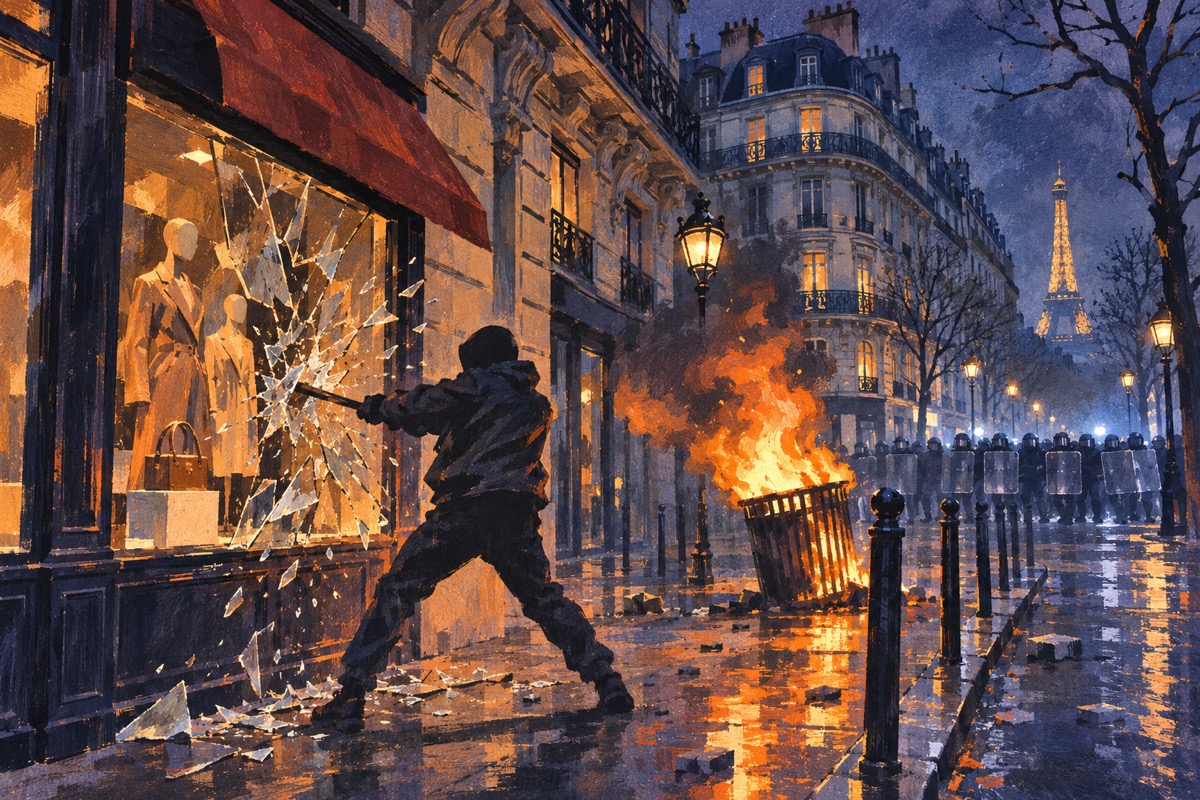
During the June 2023 unrest, a Paris council debate recorded looting at Châtelet–Les Halles and pellet fire aimed at two police officers in the 13th arrondissement. City crews cleared broken glass and burned bins, and evening bus and tram service was curtailed.

Timeline
- June 2023: Paris responds to looting, property damage and transport disruption during unrest after the Nanterre shooting.
- October 2023 onward: Parliamentary testimony records pro-Palestinian demonstrations.
- November 2026: The city and police publish preparations and restrictions for a separate labour mobilisation.
What happened in Paris
The unrest followed the fatal police shooting of Nahel Merzouk in Nanterre. Paris activated its crisis unit on June 30. The city reported road damage and barricades, prioritised clearing pedestrian routes and said that bus and tram service would again stop from 9 p.m. Parc Martin Luther King closed after overnight damage and electrical problems. The chamber of commerce offered a helpline to businesses whose stores had been vandalised. City crisis update · Paris Council proceedings
How much damage was recorded?
France’s Senate inquiry reported more than a thousand shops vandalised or looted nationally. Insurers counted €793 million for 16,400 claims. The regional shares below cover Île-de-France, including Paris and its suburbs. The city crisis update does not provide a Paris-only bill for repairs, lost sales or policing. French Senate inquiry
Each bar uses a 0–100% scale. Senate figures
Where the costs appeared
For a shopkeeper, repairs and interrupted trade can come from the same incident. The Senate figures capture claims handled by insurers. The city’s notice provides a different record of the impact, including blocked pedestrian routes and a park closure. Neither source gives the number of trading hours lost by Paris businesses or the cost of municipal cleanup in the capital.
The 9 p.m. bus and tram cutoff was a service restriction. To estimate its effect on passengers, figures such as scheduled departures cancelled, hours of suspension and typical evening ridership would be needed. The city notice establishes the cutoff time and does not provide those measurements.
Pro-Palestinian marches in Paris
In separate parliamentary testimony, the Paris police prefecture described pro-Palestinian street demonstrations held from October 2023 onward. A November 2024 prefectural order entered another Paris march into the public record. The Senate inquiry identifies the police shooting in Nanterre as the trigger for the June riots. National Assembly testimony · Paris police prefecture order
These records answer different questions. The parliamentary testimony describes demonstrations that took place. The prefectural order documents advance preparation for a particular march. Establishing how many officers worked that march, which roads closed and for how long, or whether a business incurred damage would require deployment, traffic or incident records for that date.
What Paris documented for 7 November 2026
The city’s 6 November notice identifies the following day’s mobilisation as a national cross-sector labour mobilisation. It describes precautionary measures and municipal staffing for several declared demonstrations. The 7th arrondissement also published a restriction on gatherings in part of the district, citing a risk of looting. These notices establish the reasons for preparation and restrictions. They provide no final count of injuries, arrests or damage on 7 November and do not attribute violence to migrants or pro-Palestinian demonstrators. City of Paris notice · 7th arrondissement notice